
Abnormal Psychology
... The person is overly concerned about a specific organ or body system, such as the heart or the digestive system. The person’s symptoms or area of concern might shift or change. A doctor’s reassurance does not calm the person’s fears. They believe the doctor is wrong or made a mistake. The person mig ...
... The person is overly concerned about a specific organ or body system, such as the heart or the digestive system. The person’s symptoms or area of concern might shift or change. A doctor’s reassurance does not calm the person’s fears. They believe the doctor is wrong or made a mistake. The person mig ...
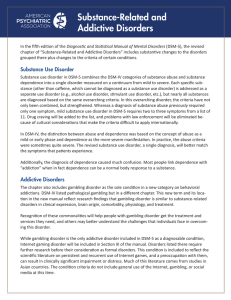
Substance-Related and Addictive Disorders
... mild or early phase and dependence as the more severe manifestation. In practice, the abuse criteria were sometimes quite severe. The revised substance use disorder, a single diagnosis, will better match the symptoms that patients experience. Additionally, the diagnosis of dependence caused much con ...
... mild or early phase and dependence as the more severe manifestation. In practice, the abuse criteria were sometimes quite severe. The revised substance use disorder, a single diagnosis, will better match the symptoms that patients experience. Additionally, the diagnosis of dependence caused much con ...
Anxiety Disorders
... The female to male ratio for specific phobias and panic disorders is 2:1. Some evidence indicates that males suffering from panic attacks are more likely to “self-medicate”. ...
... The female to male ratio for specific phobias and panic disorders is 2:1. Some evidence indicates that males suffering from panic attacks are more likely to “self-medicate”. ...
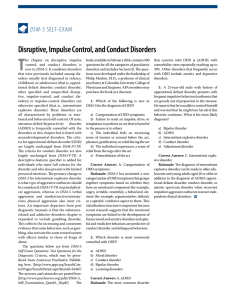
Disruptive, Impulse Control, and Conduct Disorders
... control, and conduct disorders is new to DSM-5. It combines disorders that were previously included among disorders usually first diagnosed in infancy, childhood, or adolescence (that is, oppositional defiant disorder; conduct disorder; other specified and unspecified disruptive, impulse-control, an ...
... control, and conduct disorders is new to DSM-5. It combines disorders that were previously included among disorders usually first diagnosed in infancy, childhood, or adolescence (that is, oppositional defiant disorder; conduct disorder; other specified and unspecified disruptive, impulse-control, an ...

Dissociative Disorders
... Usually appears in young adults and progresses gradually Many different kinds of symptoms’’ ...
... Usually appears in young adults and progresses gradually Many different kinds of symptoms’’ ...

Slide 1
... discuss the issues that are causing the depression with the hopes of helping the client develop more positive thoughts. 2) Electroconvulsive Shock Therapy (ECT): a brief electrical shock is administered to the patient’s head that induces a convulsion similar to an epileptic seizure. ...
... discuss the issues that are causing the depression with the hopes of helping the client develop more positive thoughts. 2) Electroconvulsive Shock Therapy (ECT): a brief electrical shock is administered to the patient’s head that induces a convulsion similar to an epileptic seizure. ...
Introduction to Psychology
... schizophrenia, bipolar, and depression? GPS STANDARD: SSPVB3- c.) Compare anxiety disorders, mood disorders, personality disorders, and schizophrenia and describe appropriate treatments for these disorders. ...
... schizophrenia, bipolar, and depression? GPS STANDARD: SSPVB3- c.) Compare anxiety disorders, mood disorders, personality disorders, and schizophrenia and describe appropriate treatments for these disorders. ...

Psychological Disorders - Lake Oswego High School
... Ego-syntonic…not a problem for the person A problem for others Resistant to treatment (only behavioral) FOCUS Antisocial, Narcissistic, OCPD ...
... Ego-syntonic…not a problem for the person A problem for others Resistant to treatment (only behavioral) FOCUS Antisocial, Narcissistic, OCPD ...


Abnormal Psychology
... two factors. • Restricted behavior is limited in focus, interest, or activity, such as preoccupation with a single television program, toy, or game. • Self Injury: includes movements that injure or can injure the person, such as eye poking, hand biting, and head banging. A 2007 study reported that s ...
... two factors. • Restricted behavior is limited in focus, interest, or activity, such as preoccupation with a single television program, toy, or game. • Self Injury: includes movements that injure or can injure the person, such as eye poking, hand biting, and head banging. A 2007 study reported that s ...
Anxiety Disorders and Somatoform Disorders
... Observational learning can produce fear which results in anxiety. ...
... Observational learning can produce fear which results in anxiety. ...
Disorders of Childhood – A General Overview
... Some did well at 1 year follow-up Some do not maintain Tx gains Lowered recidivism rates 6 - 18 months out Number of serious criminal offenses stayed the same These may be more difficult cases May require higher level of treatment ...
... Some did well at 1 year follow-up Some do not maintain Tx gains Lowered recidivism rates 6 - 18 months out Number of serious criminal offenses stayed the same These may be more difficult cases May require higher level of treatment ...
DSM-IV AND IDEA - Seattle University School of Law
... experts differently when DSM-IV diagnosis is raised in ...
... experts differently when DSM-IV diagnosis is raised in ...

Psychological Disorders - Middletown High School
... Jesus was a man with a beard, I am a man with a beard, therefore I am Jesus ...
... Jesus was a man with a beard, I am a man with a beard, therefore I am Jesus ...

Chapter 16: Psychological disorders PowerPoint
... – ICD-10, published by World Health Organization – Differs from DSM-5 on criteria – Only transient tic disorder is identical in both systems! ...
... – ICD-10, published by World Health Organization – Differs from DSM-5 on criteria – Only transient tic disorder is identical in both systems! ...

Obsessive-compulsive disorder (OCD)
... A mental health professional can diagnose obsessive-compulsive disorder after a thorough evaluation. Although there aren't any laboratory tests to diagnose OCD, your doctor may check for physical problems the condition may cause, such as dermatitis from frequent hand washing. It's sometimes difficul ...
... A mental health professional can diagnose obsessive-compulsive disorder after a thorough evaluation. Although there aren't any laboratory tests to diagnose OCD, your doctor may check for physical problems the condition may cause, such as dermatitis from frequent hand washing. It's sometimes difficul ...
Psychological Disorders Review
... False. Twin and adoptive studies support the contention that heredity plays a role in schizophrenia. ...
... False. Twin and adoptive studies support the contention that heredity plays a role in schizophrenia. ...

Personality Disorders
... • pattern of social discomfort, fear of negative evaluation, timidity • tendency towards social isolation, although desired to be liked • very sensitive to criticism – therefore, avoids contact with others • Cluster C ...
... • pattern of social discomfort, fear of negative evaluation, timidity • tendency towards social isolation, although desired to be liked • very sensitive to criticism – therefore, avoids contact with others • Cluster C ...
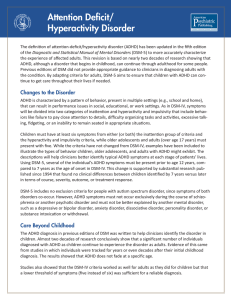
Attention Deficit/ Hyperactivity Disorder - DSM-5
... ensure that they are able to get care when needed. DSM is the manual used by clinicians and researchers to diagnose and classify mental disorders. The American Psychiatric Association (APA) will publish DSM-5 in 2013, culminating a 14-year revision process. APA is a national medical specialty societ ...
... ensure that they are able to get care when needed. DSM is the manual used by clinicians and researchers to diagnose and classify mental disorders. The American Psychiatric Association (APA) will publish DSM-5 in 2013, culminating a 14-year revision process. APA is a national medical specialty societ ...

OL Chapter 12 overview
... behavior would have been considered to be possessed by evil spirits or demons in the past (the devil made him do it). These types of nonscientific explanations persisted up until the nineteenth century. Classifying Disorders—and Labeling People But diagnostic classification does more than give us a ...
... behavior would have been considered to be possessed by evil spirits or demons in the past (the devil made him do it). These types of nonscientific explanations persisted up until the nineteenth century. Classifying Disorders—and Labeling People But diagnostic classification does more than give us a ...

dsm-v: disruptive behaviors, personality disorders and v
... • Trichotillomania moved to Obsessive Compulsive disorders • Pyromania and Kleptomania are in the disruptive, impulse control and conduct disorders and little changed ...
... • Trichotillomania moved to Obsessive Compulsive disorders • Pyromania and Kleptomania are in the disruptive, impulse control and conduct disorders and little changed ...


Abnormal Psychology
... discuss the issues that are causing the depression with the hopes of helping the client develop more positive thoughts. 2) Electroconvulsive Shock Therapy (ECT): a brief electrical shock is administered to the patient’s head that induces a convulsion similar to an epileptic seizure. ...
... discuss the issues that are causing the depression with the hopes of helping the client develop more positive thoughts. 2) Electroconvulsive Shock Therapy (ECT): a brief electrical shock is administered to the patient’s head that induces a convulsion similar to an epileptic seizure. ...

Personality Disorders in Long Term Care
... Personality and Aging • Can be changed by changes in the brain – Newly introverted, avoidant due to a stroke, e.g. – Disinhibited by frontal lobe symptoms of dementia ...
... Personality and Aging • Can be changed by changes in the brain – Newly introverted, avoidant due to a stroke, e.g. – Disinhibited by frontal lobe symptoms of dementia ...