
Rocks - SchoolWorld an Edline Solution
... when sediments precipitate out of a solution Sediments are loose materials such as rock fragments, mineral grains, bits of plants and animals that have been moved by wind, water, ice, or gravity ...
... when sediments precipitate out of a solution Sediments are loose materials such as rock fragments, mineral grains, bits of plants and animals that have been moved by wind, water, ice, or gravity ...

Name
... Which list of silicate minerals shows the order in which they would weather from least resistant to most resistant? The atmospheric gas that forms a weak acid when dissolved in water is _______. If granite and basalt were exposed in an area with a hot and humid climate: Which of the following is NOT ...
... Which list of silicate minerals shows the order in which they would weather from least resistant to most resistant? The atmospheric gas that forms a weak acid when dissolved in water is _______. If granite and basalt were exposed in an area with a hot and humid climate: Which of the following is NOT ...


Alabama – Paleozoic and Precambrian Eras
... Orogeny) occurred in the middle Ordovician. Layers of ash from associated volcanic activity and sediments eroding off the rising mountains were periodically deposited into the sea. Melting caused by the subduction of the crust during this orogeny produced massive plutons of granite-type rock. Althou ...
... Orogeny) occurred in the middle Ordovician. Layers of ash from associated volcanic activity and sediments eroding off the rising mountains were periodically deposited into the sea. Melting caused by the subduction of the crust during this orogeny produced massive plutons of granite-type rock. Althou ...

File - MSP Humanities at IISB
... Physical environment – the coasts here are made of weak rocks – called boulder clay which have been carried by the icesheets at the end of the last glacial period (= Devensian 10,000 yrs ago). The cliffs around Mappleton have been affected – eg Mr Cross and Sue Earle’s farm, Easington Gas Terminal i ...
... Physical environment – the coasts here are made of weak rocks – called boulder clay which have been carried by the icesheets at the end of the last glacial period (= Devensian 10,000 yrs ago). The cliffs around Mappleton have been affected – eg Mr Cross and Sue Earle’s farm, Easington Gas Terminal i ...
Sea Floor Spreading
... • He suggested that the ocean floors move like conveyor belts, carrying the continents along with them. ...
... • He suggested that the ocean floors move like conveyor belts, carrying the continents along with them. ...

Slide 1
... • Extensive erosion, transportation (rivers), deposition of sediments from the Shield into adjacent seas • Compression of sediments in ancient seas create sedimentary rock • Today these sedimentary rocks form the bedrock for parts of every province • Organisms in seas form basis of oil/gas deposits ...
... • Extensive erosion, transportation (rivers), deposition of sediments from the Shield into adjacent seas • Compression of sediments in ancient seas create sedimentary rock • Today these sedimentary rocks form the bedrock for parts of every province • Organisms in seas form basis of oil/gas deposits ...

presentation
... Taconian thrust Conodont biofacies is 463 to 460 Ma Rocks are Ordovician not Lower Cambrian ...
... Taconian thrust Conodont biofacies is 463 to 460 Ma Rocks are Ordovician not Lower Cambrian ...

Rock cycle and Rocks made simple
... and give at least two examples for each type of rock that you are learning about. Write a short description for each type of rock. 1. Sedimentary rocks Sedimentary rocks form at the earth’s surface. About three quarters of the earth’s surface is made up of sedimentary rocks. Clastic sedimentary rock ...
... and give at least two examples for each type of rock that you are learning about. Write a short description for each type of rock. 1. Sedimentary rocks Sedimentary rocks form at the earth’s surface. About three quarters of the earth’s surface is made up of sedimentary rocks. Clastic sedimentary rock ...

Topic 13: Interpreting Geologic History
... of relative age dating. For the cross section list the order of events that occurred to form the rocks illustrated. Make sure to include when erosion and deformation occurred. ** If there is a wavy line, erosion has occurred and if layers are not horizontal, folding has occurred** ...
... of relative age dating. For the cross section list the order of events that occurred to form the rocks illustrated. Make sure to include when erosion and deformation occurred. ** If there is a wavy line, erosion has occurred and if layers are not horizontal, folding has occurred** ...

the facinating article
... shows this happening during one short period of this complex history. After one of these plate reorganisations the Tasman Sea began opening up. New Zealand drifted away to the east. The eastern Australian coastal rim moved slowly upward, forming the elevated scarp and plateau that we cross to get ...
... shows this happening during one short period of this complex history. After one of these plate reorganisations the Tasman Sea began opening up. New Zealand drifted away to the east. The eastern Australian coastal rim moved slowly upward, forming the elevated scarp and plateau that we cross to get ...

Rocks
... when sediments precipitate out of a solution Sediments are loose materials such as rock fragments, mineral grains, bits of plants and animals that have been moved by wind, water, ice, or gravity ...
... when sediments precipitate out of a solution Sediments are loose materials such as rock fragments, mineral grains, bits of plants and animals that have been moved by wind, water, ice, or gravity ...

SES4UOrogenic Case Study
... while the coastal plain is made up of the material that was washed away in that process. Thus, the coastal plain and Piedmont are largely the byproducts of erosion that took place from 150+ million years ago to the present. Evidence for the Appalachian orogeny stretches for many hundreds of miles on ...
... while the coastal plain is made up of the material that was washed away in that process. Thus, the coastal plain and Piedmont are largely the byproducts of erosion that took place from 150+ million years ago to the present. Evidence for the Appalachian orogeny stretches for many hundreds of miles on ...


Glaucophane marbles and associated high
... The rocks of the island of Syros are part of the Attic-Cycladic blueschist belt that formed during Eurasia-Africa subduction, which began in the Mesozoic. The rocks of Syros, as presently understood, can be broadly divided into three tectono-stratigraphic units: (I) metasedimentary and metavolcanic ...
... The rocks of the island of Syros are part of the Attic-Cycladic blueschist belt that formed during Eurasia-Africa subduction, which began in the Mesozoic. The rocks of Syros, as presently understood, can be broadly divided into three tectono-stratigraphic units: (I) metasedimentary and metavolcanic ...
Changes on Earth
... Any action that causes the break down of the Earth’s surface. Weathering is caused by water, as it freezes and thaws, as well as by chemical reactions that loosen the bonds holding rocks together. ...
... Any action that causes the break down of the Earth’s surface. Weathering is caused by water, as it freezes and thaws, as well as by chemical reactions that loosen the bonds holding rocks together. ...
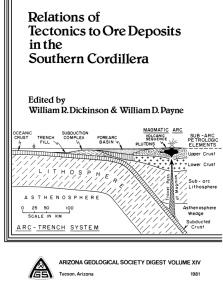

Ch 6 ppt
... • The more central part of a desert basin – might be the site of a temporary lake, a playa lake, – in which laminated mud and evaporites accumulate ...
... • The more central part of a desert basin – might be the site of a temporary lake, a playa lake, – in which laminated mud and evaporites accumulate ...

Sediments
... • Glacial deposits = from continental shelf, many formed during Pleistocene Epoch • Rafting = sediments carried from shore by icebergs & deposited when they melt • Stromatolites = dome-shaped calcareous structures in shallow water that had been secreted in layers by ancient cyanobacteria ...
... • Glacial deposits = from continental shelf, many formed during Pleistocene Epoch • Rafting = sediments carried from shore by icebergs & deposited when they melt • Stromatolites = dome-shaped calcareous structures in shallow water that had been secreted in layers by ancient cyanobacteria ...

Presentation
... swampy vegetation could grow. Other mismatches of geology and climate included distinctive fossil ferns (Glossopteris) discovered in now-polar regions, and the occurrence of glacial deposits in present-day arid Africa, such as the Vaal River valley of South Africa. ...
... swampy vegetation could grow. Other mismatches of geology and climate included distinctive fossil ferns (Glossopteris) discovered in now-polar regions, and the occurrence of glacial deposits in present-day arid Africa, such as the Vaal River valley of South Africa. ...

Chapter 7 Section 2 Pages 198-201
... swampy vegetation could grow. Other mismatches of geology and climate included distinctive fossil ferns (Glossopteris) discovered in now-polar regions, and the occurrence of glacial deposits in present-day arid Africa, such as the Vaal River valley of South Africa. ...
... swampy vegetation could grow. Other mismatches of geology and climate included distinctive fossil ferns (Glossopteris) discovered in now-polar regions, and the occurrence of glacial deposits in present-day arid Africa, such as the Vaal River valley of South Africa. ...
Chapter 10
... • Shallow seas cover many of the continents. • Evaporites within 30o N and S of equator - the latitude at which deserts are present today. • Iapetus Ocean (or Proto-Atlantic) formed as Laurentia drifted away from South America. ...
... • Shallow seas cover many of the continents. • Evaporites within 30o N and S of equator - the latitude at which deserts are present today. • Iapetus Ocean (or Proto-Atlantic) formed as Laurentia drifted away from South America. ...
Geology of Great Britain

The geology of Great Britain is renowned for its diversity. As a result of its eventful geological history, Great Britain shows a rich variety of landscapes across the constituent countries of England, Wales and Scotland. Rocks of almost all geological ages are represented at outcrop, from the Archaean onwards.