
Introduction to Psychology, 7th Edition, Rod Plotnik
... • characterized by anxiety about being in places or situations from which escape might be difficult or embarrassing • Phobias – _________________________________________________________: • Learning Theory (cognitive perspective) – _____________________________________--associate object with frighten ...
... • characterized by anxiety about being in places or situations from which escape might be difficult or embarrassing • Phobias – _________________________________________________________: • Learning Theory (cognitive perspective) – _____________________________________--associate object with frighten ...
Mental Disorders
... and thinking processes. These people have difficulty thinking rationally and their judgments are impaired. Living their daily life becomes very, very difficult. However, for even the worst of these disorders there is treatment available. The most prevalent symptoms of these diseases are usually delu ...
... and thinking processes. These people have difficulty thinking rationally and their judgments are impaired. Living their daily life becomes very, very difficult. However, for even the worst of these disorders there is treatment available. The most prevalent symptoms of these diseases are usually delu ...


Eating disorders: About more than food
... continues. “For anorexics, what may start out as an effort to lose weight and get healthier takes on a life of its own. A person losing weight doesn’t know when to stop … becomes fearful of certain foods, or foods are designated good or bad. They develop rituals and preoccupation with certain foods ...
... continues. “For anorexics, what may start out as an effort to lose weight and get healthier takes on a life of its own. A person losing weight doesn’t know when to stop … becomes fearful of certain foods, or foods are designated good or bad. They develop rituals and preoccupation with certain foods ...
Mod 65: Introduction to Psychological Disorders
... Instituted humane treatment for “sick” (had been chained & many times without clothing--would actually go to insane asylum like it was a zoo) (Mad as a hatter phrase that came from haberdashers actually becoming insane from mercury poisoning--wet their fingers that came into contact with the mercury ...
... Instituted humane treatment for “sick” (had been chained & many times without clothing--would actually go to insane asylum like it was a zoo) (Mad as a hatter phrase that came from haberdashers actually becoming insane from mercury poisoning--wet their fingers that came into contact with the mercury ...

Psychopathology
... is the study of mental illness, mental distress and abnormal, maladaptive behavior. ...
... is the study of mental illness, mental distress and abnormal, maladaptive behavior. ...

Anxiety
... Persistent fear over possible harm to, loss of, or separation from attachment figures fear of being alone or without figure fear of sleeping without figure being near ...
... Persistent fear over possible harm to, loss of, or separation from attachment figures fear of being alone or without figure fear of sleeping without figure being near ...
Anxiety Disorders
... The DSM-IV classifies 3 types of phobic disorders. • Social phobia (meeting others, dating, giving speeches in ...
... The DSM-IV classifies 3 types of phobic disorders. • Social phobia (meeting others, dating, giving speeches in ...

Abnormal Psychology - West Essex High School
... • Organic amnesia can be retrograde or antrograde. ...
... • Organic amnesia can be retrograde or antrograde. ...
Obsessive Compulsive Disorder
... In about <5% of cases of OCD in children, it is felt that a contributory medical condition causing OCD symptoms is PANDAS (pediatric autoimmune neuropsychiatric disorders associated with streptococcal infection). It is characterized by sudden onset or exacerbation of OCD symptoms in the presence of ...
... In about <5% of cases of OCD in children, it is felt that a contributory medical condition causing OCD symptoms is PANDAS (pediatric autoimmune neuropsychiatric disorders associated with streptococcal infection). It is characterized by sudden onset or exacerbation of OCD symptoms in the presence of ...
Obsessive-Compulsive Disorder
... – ______________________________ – social skills & __________________ • Cognitive therapies ...
... – ______________________________ – social skills & __________________ • Cognitive therapies ...


Abnormal Psychology - AP Psychology Community
... • Organic amnesia can be retrograde or antrograde. ...
... • Organic amnesia can be retrograde or antrograde. ...

Major Psychological Disorders
... Personality disorders Antisocial personality disorder – a disorder in which individuals show no regard for the moral and ethical rules of society or the rights of others. Borderline personality disorder – a disorder in which individuals have difficulty developing a secure sense of who they are. ...
... Personality disorders Antisocial personality disorder – a disorder in which individuals show no regard for the moral and ethical rules of society or the rights of others. Borderline personality disorder – a disorder in which individuals have difficulty developing a secure sense of who they are. ...

Jeopardy Power Point
... GAD What anxiety disorder is characterized by excessive or unrealistic worry ...
... GAD What anxiety disorder is characterized by excessive or unrealistic worry ...



Eating Disorders - Bradley Hospital
... Eating disorders are characterized by a preoccupation with food and a distorted body image (a child thinks he or she is fat when he or she is really underweight or of normal weight). Although it is normal for children to be occasionally concerned with their appearance, weight, and the type of food t ...
... Eating disorders are characterized by a preoccupation with food and a distorted body image (a child thinks he or she is fat when he or she is really underweight or of normal weight). Although it is normal for children to be occasionally concerned with their appearance, weight, and the type of food t ...
Chpt_13_Psychologica..
... Anorexia coupled with certainty about being meet criteria at Nervosa fat despite being 15 percent or some time more underweight during lifetime ____________ Compulsion to binge, eating large ____________ amounts fast, then purge by losing 1.0 percent the food through vomiting, laxatives, and extreme ...
... Anorexia coupled with certainty about being meet criteria at Nervosa fat despite being 15 percent or some time more underweight during lifetime ____________ Compulsion to binge, eating large ____________ amounts fast, then purge by losing 1.0 percent the food through vomiting, laxatives, and extreme ...
Full Text: PDF - Medicine Today
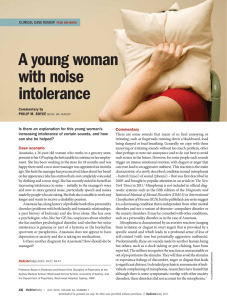
... York Times in 2011.2 Misophonia is not included in official diagnostic systems such as the fifth edition of the Diagnostic and Statistical Manual of Mental Disorders (DSM-5) or International Classification of Diseases (ICD), but the published case series suggest it is a distressing condition that is ...
... York Times in 2011.2 Misophonia is not included in official diagnostic systems such as the fifth edition of the Diagnostic and Statistical Manual of Mental Disorders (DSM-5) or International Classification of Diseases (ICD), but the published case series suggest it is a distressing condition that is ...
Psychology Term Paper
... rid of your anxiety – that you have some control over your obsessive thoughts and compulsive behaviors. Studies show that exposure and response prevention can actually “retrain” the brain, permanently reducing the occurrence of obsessive-compulsive disorder symptoms. This type of OCD therapy can eve ...
... rid of your anxiety – that you have some control over your obsessive thoughts and compulsive behaviors. Studies show that exposure and response prevention can actually “retrain” the brain, permanently reducing the occurrence of obsessive-compulsive disorder symptoms. This type of OCD therapy can eve ...

File
... Wide mood swings over periods of time, going from deep depression to wild mania Mania: extreme excitement, elation, energy, decreased need for sleep, going from one idea to another, engaging in silly or destructive behaviors Varying degrees of bipolar disorder, from mild to severe; some forms may mi ...
... Wide mood swings over periods of time, going from deep depression to wild mania Mania: extreme excitement, elation, energy, decreased need for sleep, going from one idea to another, engaging in silly or destructive behaviors Varying degrees of bipolar disorder, from mild to severe; some forms may mi ...