
Reading Further: Divided House Divided Families (HA)
... Helm’s dilemma, though difficult, was not unusual. Many people found themselves torn between competing loyalties during the Civil War. This was especially true in border states like Kentucky, Maryland, Missouri, and Delaware. Although these states remained in the Union, many of their citizens felt s ...
... Helm’s dilemma, though difficult, was not unusual. Many people found themselves torn between competing loyalties during the Civil War. This was especially true in border states like Kentucky, Maryland, Missouri, and Delaware. Although these states remained in the Union, many of their citizens felt s ...
LIFE IN A WAR ZONE - Heritage Montgomery
... Chief of Aeronautics for the Federal army, set up an observation balloon camp here. Using tethered hot air balloons, the military could scout Confederate activities in and around Leesburg. On June 25-27, 1863, twin pontoon bridges 1400 feet in length (over 4 ½ football fields) were erected at Edward ...
... Chief of Aeronautics for the Federal army, set up an observation balloon camp here. Using tethered hot air balloons, the military could scout Confederate activities in and around Leesburg. On June 25-27, 1863, twin pontoon bridges 1400 feet in length (over 4 ½ football fields) were erected at Edward ...

AA "The Fighting Irish Brigade" Article
... of Erin than during those six frantic dashes which they directed against the almost impregnable positions of their foe.” A legend also arose that Lee was told that the New Yorkers had made a brave attack against the stone wall, Lee recognized the regiment from the Seven Days Campaign and was said to ...
... of Erin than during those six frantic dashes which they directed against the almost impregnable positions of their foe.” A legend also arose that Lee was told that the New Yorkers had made a brave attack against the stone wall, Lee recognized the regiment from the Seven Days Campaign and was said to ...
The Long Road to Antietam
... he takes a different perspective than James McPherson’s Cross roads of Freedom: Antietam(2002) by arguing that the battle did much more than arrest Confederate military success, forestall foreign diplomatic recognition of the Confederacy, and provide Lincoln with an opportunity to issue the Prelimin ...
... he takes a different perspective than James McPherson’s Cross roads of Freedom: Antietam(2002) by arguing that the battle did much more than arrest Confederate military success, forestall foreign diplomatic recognition of the Confederacy, and provide Lincoln with an opportunity to issue the Prelimin ...

The Road to Revolution – Ch
... imprisoned without formal charges against them); however, he had a relatively good record on upholding civil liberties; often in wartime, governments are known to limit civil liberties for the safety of the country Copperheads – A Republican term for those dissenting against the war, or those suspec ...
... imprisoned without formal charges against them); however, he had a relatively good record on upholding civil liberties; often in wartime, governments are known to limit civil liberties for the safety of the country Copperheads – A Republican term for those dissenting against the war, or those suspec ...
Civil War - kristenmclain
... upset that it was divided. The French influence in Mexico and it would suit them if they were seceded. The Confederates sent troops to London and Paris, to lobby for official recognition. ...
... upset that it was divided. The French influence in Mexico and it would suit them if they were seceded. The Confederates sent troops to London and Paris, to lobby for official recognition. ...

Course 6-22-2
... Colonel Chamberlain at Gettysburg In late June 1863 General Robert E. Lee’s Army of Northern Virginia passed through western Maryland and invaded Pennsylvania. For five days, the Army of the Potomac hurried to get between the Confederates and the national capital. On 1 July 1863, the 20th Maine rece ...
... Colonel Chamberlain at Gettysburg In late June 1863 General Robert E. Lee’s Army of Northern Virginia passed through western Maryland and invaded Pennsylvania. For five days, the Army of the Potomac hurried to get between the Confederates and the national capital. On 1 July 1863, the 20th Maine rece ...
Document
... • Abolitionist – a person who opposed slavery and was in favor of ending it. • Nullification – belief that a state has the right to not follow a federal law • Blockade - cutting off supplies as an act of war. • Underground Railroad – secret network to help slaves escape to freedom. • Popular soverei ...
... • Abolitionist – a person who opposed slavery and was in favor of ending it. • Nullification – belief that a state has the right to not follow a federal law • Blockade - cutting off supplies as an act of war. • Underground Railroad – secret network to help slaves escape to freedom. • Popular soverei ...
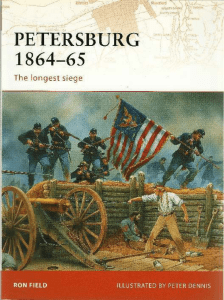
The longest siege
... assorted vessels, in an additional attempt to close in on Richmond. Seizing Wilson's Wharf and Fort Powhatan, seven miles upriver, and City Point a further 12 miles closer to the Confederate capital, his forces advanced into Bermuda Hundred, but were prevented from progressing further by strong Conf ...
... assorted vessels, in an additional attempt to close in on Richmond. Seizing Wilson's Wharf and Fort Powhatan, seven miles upriver, and City Point a further 12 miles closer to the Confederate capital, his forces advanced into Bermuda Hundred, but were prevented from progressing further by strong Conf ...
The Civil War - HONORS UNITED STATES HISTORY
... Doc 15: After Antietam Lincoln and McClellan Lincoln meeting with McClellan after the Battle of Antietam McClellan was fired for not pursuing Lee when he had the chance. “He has a case of the slows” Lincoln remarked of General McClellan. ...
... Doc 15: After Antietam Lincoln and McClellan Lincoln meeting with McClellan after the Battle of Antietam McClellan was fired for not pursuing Lee when he had the chance. “He has a case of the slows” Lincoln remarked of General McClellan. ...

Battles of the Civil War PPT
... • There was a large Railroad hub in Chattanooga. • If the union gained control of this railroad they would have access to the railroads in the part of the country and would be able to transport troops and supplies to the south. • Later will lead to the Battle of Chattanooga. • Large amount of casual ...
... • There was a large Railroad hub in Chattanooga. • If the union gained control of this railroad they would have access to the railroads in the part of the country and would be able to transport troops and supplies to the south. • Later will lead to the Battle of Chattanooga. • Large amount of casual ...
Union
... • Major General John Pope, a Union troop leader in northern Virginia attacked approaching Confederate troops lead by Stonewall Jackson on August 29,1862. • This started the Second Battle of Bull Run. • Confederates WIN this battle • Lee and his men were only 20 miles from Washington D.C. ...
... • Major General John Pope, a Union troop leader in northern Virginia attacked approaching Confederate troops lead by Stonewall Jackson on August 29,1862. • This started the Second Battle of Bull Run. • Confederates WIN this battle • Lee and his men were only 20 miles from Washington D.C. ...
Chapter 16 Study Guide
... • What social, political, and economic trouble might be likely to occur in a civil war? • What might happen when a civil war breaks out? ...
... • What social, political, and economic trouble might be likely to occur in a civil war? • What might happen when a civil war breaks out? ...

a pdf map of area Civil War sites
... The valley of the South Branch of the Potomac River saw an incredible amount of troop activity and action. Its story is hauntingly similar to that of the famed Shenandoah Valley, albeit on a smaller scale. Indeed, if the Shenandoah was the granary of the Confederacy, then this bountiful region may w ...
... The valley of the South Branch of the Potomac River saw an incredible amount of troop activity and action. Its story is hauntingly similar to that of the famed Shenandoah Valley, albeit on a smaller scale. Indeed, if the Shenandoah was the granary of the Confederacy, then this bountiful region may w ...


God Bless the South Commander Calvin Hart
... In June 1916, as Woodrow Wilson began to push through Congress a remarkable set of laws militarizing the country, including the expansion of the Army and National Guard (and an authorization to place the former under federal authority), the construction of nitrate plants for munitions production, an ...
... In June 1916, as Woodrow Wilson began to push through Congress a remarkable set of laws militarizing the country, including the expansion of the Army and National Guard (and an authorization to place the former under federal authority), the construction of nitrate plants for munitions production, an ...
ГИМНАЗИЈА «ПАТРИЈАРХ ПАВЛЕ» Матурски рад из Енглеског
... where it exists. I believe I have no lawful right to do so, and I have no inclination to do so. After Confederate forces seized numerous federal forts within territory claimed by the Confederacy, efforts at compromise failed and both sides prepared for war. The Confederates assumed that European cou ...
... where it exists. I believe I have no lawful right to do so, and I have no inclination to do so. After Confederate forces seized numerous federal forts within territory claimed by the Confederacy, efforts at compromise failed and both sides prepared for war. The Confederates assumed that European cou ...
On July 3, 1863 outside the town of Gettysburg, Pennsylvania
... Lee carefully sculpted his plans to ensure a victory against Union infantry with his battered yet battle-hardened and tested infantry and artillery. The commanding general wished to employ an offensive maneuver which would pin pivotal elements of the Federal Army into their previously occupied and d ...
... Lee carefully sculpted his plans to ensure a victory against Union infantry with his battered yet battle-hardened and tested infantry and artillery. The commanding general wished to employ an offensive maneuver which would pin pivotal elements of the Federal Army into their previously occupied and d ...

Battle at Palmito Ranch File
... they destroyed the rest of the supplies not torched the day before and continued on. ...
... they destroyed the rest of the supplies not torched the day before and continued on. ...

Pennsylvania`s Monuments at Antietam
... regiment organized at Camp Curtin in the Fall of 1861 with men from the counties of Centre, Lancaster, Mifflin, Tioga and Wayne. The regiment was assigned to the 2nd Brigade, 1st Division, 9th Corps at the time of Antietam. At about 2PM the regiment joined in the Corps‟ attack on the Confederate lin ...
... regiment organized at Camp Curtin in the Fall of 1861 with men from the counties of Centre, Lancaster, Mifflin, Tioga and Wayne. The regiment was assigned to the 2nd Brigade, 1st Division, 9th Corps at the time of Antietam. At about 2PM the regiment joined in the Corps‟ attack on the Confederate lin ...
Chapter 11 - Valhalla High School
... (A) They claimed more lives than any vessels before them. (B) They made the wooden navies obsolete. (C) The Merrimack was able to destroy the Monitor. (D) Both ships were unsinkable. ...
... (A) They claimed more lives than any vessels before them. (B) They made the wooden navies obsolete. (C) The Merrimack was able to destroy the Monitor. (D) Both ships were unsinkable. ...

From These Honored Dead: Historical Archaeology of the American
... not as poorly organized or strapped for war material as is often portrayed in the literature. I agree, but material should properly read matériel, as per military usage (the term originated in France in 1819). Scott also states, “simple artifacts have the potential to aid in reconstructing historica ...
... not as poorly organized or strapped for war material as is often portrayed in the literature. I agree, but material should properly read matériel, as per military usage (the term originated in France in 1819). Scott also states, “simple artifacts have the potential to aid in reconstructing historica ...
America: Pathways to the Present
... (A) They claimed more lives than any vessels before them. (B) They made the wooden navies obsolete. (C) The Merrimack was able to destroy the Monitor. (D) Both ships were unsinkable. ...
... (A) They claimed more lives than any vessels before them. (B) They made the wooden navies obsolete. (C) The Merrimack was able to destroy the Monitor. (D) Both ships were unsinkable. ...
Economics
... (A) They claimed more lives than any vessels before them. (B) They made the wooden navies obsolete. (C) The Merrimack was able to destroy the Monitor. (D) Both ships were unsinkable. ...
... (A) They claimed more lives than any vessels before them. (B) They made the wooden navies obsolete. (C) The Merrimack was able to destroy the Monitor. (D) Both ships were unsinkable. ...
Driving Tour - Visit Kinston
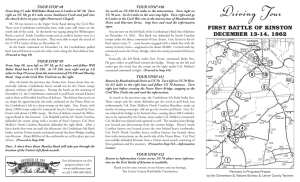
... After the battle the previous day, Union Gen. Foster knew that numerically inferior Confederate forces would not let the Union troops advance without stiff resistance. During the battle on the morning of December 14, the Confederates continued to pull back toward Kinston and to their well fortified ...
... After the battle the previous day, Union Gen. Foster knew that numerically inferior Confederate forces would not let the Union troops advance without stiff resistance. During the battle on the morning of December 14, the Confederates continued to pull back toward Kinston and to their well fortified ...
Battle of Antietam

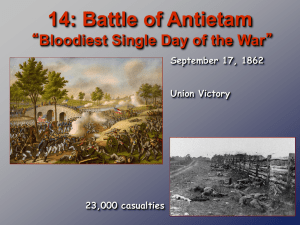
The Battle of Antietam /ænˈtiːtəm/, also known as the Battle of Sharpsburg, particularly in the South, fought on September 17, 1862, near Sharpsburg, Maryland, and Antietam Creek as part of the Maryland Campaign, was the first major battle in the American Civil War to take place on Union soil. It is the bloodiest single-day battle in American history, with a combined tally of dead, wounded, and missing at 22,717.After pursuing Confederate General Robert E. Lee into Maryland, Union Army Maj. Gen. George B. McClellan launched attacks against Lee's army, in defensive positions behind Antietam Creek. At dawn on September 17, Maj. Gen. Joseph Hooker's corps mounted a powerful assault on Lee's left flank. Attacks and counterattacks swept across Miller's Cornfield and fighting swirled around the Dunker Church. Union assaults against the Sunken Road eventually pierced the Confederate center, but the Federal advantage was not followed up. In the afternoon, Union Maj. Gen. Ambrose Burnside's corps entered the action, capturing a stone bridge over Antietam Creek and advancing against the Confederate right. At a crucial moment, Confederate Maj. Gen. A. P. Hill's division arrived from Harpers Ferry and launched a surprise counterattack, driving back Burnside and ending the battle. Although outnumbered two-to-one, Lee committed his entire force, while McClellan sent in less than three-quarters of his army, enabling Lee to fight the Federals to a standstill. During the night, both armies consolidated their lines. In spite of crippling casualties, Lee continued to skirmish with McClellan throughout September 18, while removing his battered army south of the Potomac River.Despite having superiority of numbers, McClellan's attacks failed to achieve force concentration, allowing Lee to counter by shifting forces and moving interior lines to meet each challenge. Despite ample reserve forces that could have been deployed to exploit localized successes, McClellan failed to destroy Lee's army. McClellan had halted Lee's invasion of Maryland, but Lee was able to withdraw his army back to Virginia without interference from the cautious McClellan. Although the battle was tactically inconclusive, the Confederate troops had withdrawn first from the battlefield, making it, in military terms, a Union victory. It had significance as enough of a victory to give President Abraham Lincoln the confidence to announce his Emancipation Proclamation, which discouraged the British and French governments from potential plans for recognition of the Confederacy.