
A FAMILY STUDY OF OBSESSIVE
... She said that she tries to throw things away but that she “just can’t decide what to get rid of.” About 6 months ago, she became unable to live in her 6-room house due to the clutter, and she rented an apartment elsewhere. She reports intrusive need for symmetry, constantly rearranging things, and c ...
... She said that she tries to throw things away but that she “just can’t decide what to get rid of.” About 6 months ago, she became unable to live in her 6-room house due to the clutter, and she rented an apartment elsewhere. She reports intrusive need for symmetry, constantly rearranging things, and c ...

Personality Disorders
... disadvantaged ethnic groups. People with psychological disorders are stigmatized by the people around them. ...
... disadvantaged ethnic groups. People with psychological disorders are stigmatized by the people around them. ...
What are Eating Disorders? - National Eating Disorders Awareness
... that greater resources are needed to educate, screen, refer and treat students who struggle with eating disorders or disordered eating issues. Proud2Bme On Campus was launched to address this growing need. NYU students and faculty can visit Proud2Bme.org/oncampus to find… ...
... that greater resources are needed to educate, screen, refer and treat students who struggle with eating disorders or disordered eating issues. Proud2Bme On Campus was launched to address this growing need. NYU students and faculty can visit Proud2Bme.org/oncampus to find… ...
Rieger Chapter Summaries PowerPoint 06
... 1. Recurrent episodes of binge eating with a sense of loss of control over food intake 2. Inappropriate compensatory behaviour to prevent weight gain 3. Both (1) and (2) occur on average at least 2x per week for 3 months 4. Self-evaluation unduly influenced by body shape and weight 5. Absence of ano ...
... 1. Recurrent episodes of binge eating with a sense of loss of control over food intake 2. Inappropriate compensatory behaviour to prevent weight gain 3. Both (1) and (2) occur on average at least 2x per week for 3 months 4. Self-evaluation unduly influenced by body shape and weight 5. Absence of ano ...
Other Conditions That May Be a Focus of Clinical Attention
... 1. Behaviors which are associated with a classification are seen but there is uncertainty regarding the diagnostic category due to the fact that The client presents some symptoms of the category but a complete clinical impression is not clear The client responds to external stimuli with symptoms ...
... 1. Behaviors which are associated with a classification are seen but there is uncertainty regarding the diagnostic category due to the fact that The client presents some symptoms of the category but a complete clinical impression is not clear The client responds to external stimuli with symptoms ...
DSM-V: Trauma-and Stressor-Related Disorders
... According to NCPTSD: “National estimates of PTSD prevalence suggest that DSM-5 rates were slightly lower than DSM-IV. … Revision of Criterion A1 in DSM-5 narrowed qualifying traumatic events such that the unexpected death of family or a close friend due to natural causes is no longer included. Resea ...
... According to NCPTSD: “National estimates of PTSD prevalence suggest that DSM-5 rates were slightly lower than DSM-IV. … Revision of Criterion A1 in DSM-5 narrowed qualifying traumatic events such that the unexpected death of family or a close friend due to natural causes is no longer included. Resea ...
Application of a Latent Class Analysis to Empirically Define Eating
... The Multidimensional Perfectionism Scale30 evaluates overall perfectionism along with 6 specific dimensions of perfectionism (concern over mistakes, high personal standards, high perceived parental expectations, high perceived parental criticism, doubt about quality of performance, and need for orga ...
... The Multidimensional Perfectionism Scale30 evaluates overall perfectionism along with 6 specific dimensions of perfectionism (concern over mistakes, high personal standards, high perceived parental expectations, high perceived parental criticism, doubt about quality of performance, and need for orga ...
Exploring Eating Disorders Handout
... Sometimes the person needs intravenous (IV) fluids or some nutrition through a feeding tube until they are eating enough. Seek help Get psychiatric treatment. Anxiety, depression, obsessive-compulsive disorder (OCD), or substance abuse may be making the eating disorder worse. Go to counselin ...
... Sometimes the person needs intravenous (IV) fluids or some nutrition through a feeding tube until they are eating enough. Seek help Get psychiatric treatment. Anxiety, depression, obsessive-compulsive disorder (OCD), or substance abuse may be making the eating disorder worse. Go to counselin ...
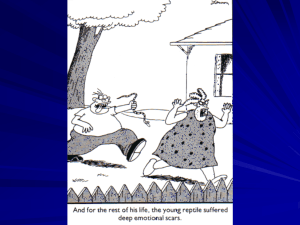
10 Anxiety Disorders
... features • marked and persistent fear and avoidance of specific stimulus or situation • must interfere significantly with person’s life ...
... features • marked and persistent fear and avoidance of specific stimulus or situation • must interfere significantly with person’s life ...
Mood Disorders
... exclusion does not apply if all of the manic-like , mixed-like, or hypomanic-like episodes are substance or treatment induced or a re due to the direct physiological effects of a general medical condition. ...
... exclusion does not apply if all of the manic-like , mixed-like, or hypomanic-like episodes are substance or treatment induced or a re due to the direct physiological effects of a general medical condition. ...
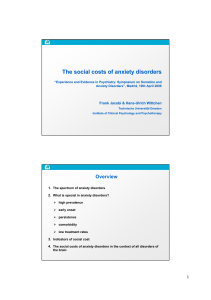
The social costs of anxiety disorders
... because subjects can have more than one disorder (comorbidity) ...
... because subjects can have more than one disorder (comorbidity) ...
DMH Adult Clinical Service Authorization
... means for obtaining them. The qualifying mental disorder must be confirmed before assessing whether the applicant meets duration and functional impairment criteria. Functional impairment will be determined based on the applicant’s presentation. It is presumed that the functional impairment in a pers ...
... means for obtaining them. The qualifying mental disorder must be confirmed before assessing whether the applicant meets duration and functional impairment criteria. Functional impairment will be determined based on the applicant’s presentation. It is presumed that the functional impairment in a pers ...
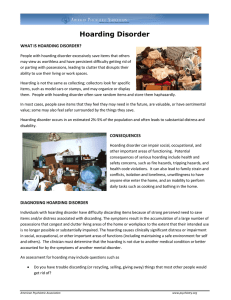
Hoarding Disorder WHAT IS HOARDING DISORDER?
... creating unhealthy, unsafe conditions for the animals. Hoarding was previously considered a subtype or symptom dimension of obsessive compulsive disorder (OCD) or obsessive compulsive personality disorder, but recent research has indicated that it is more appropriately classified as a distinct condi ...
... creating unhealthy, unsafe conditions for the animals. Hoarding was previously considered a subtype or symptom dimension of obsessive compulsive disorder (OCD) or obsessive compulsive personality disorder, but recent research has indicated that it is more appropriately classified as a distinct condi ...
The Diagnostic and Statistical Manual of Mental Disorders, Fifth
... • “DSM is a medical classification of disorders and as such serves as a historically determined cognitive schema imposed on clinical and scientific information to increase its comprehensibility and utility.” • “Conditions for Further Study,” described in Section III, are those for which it was deter ...
... • “DSM is a medical classification of disorders and as such serves as a historically determined cognitive schema imposed on clinical and scientific information to increase its comprehensibility and utility.” • “Conditions for Further Study,” described in Section III, are those for which it was deter ...
Chapter 11 Teachers 1. Personality disorders consist of a loosely
... a. Individuals are significantly more disturbed, and may require more intensive treatment than individuals with an Axis I disorder alone b. Many personality disorders consist of ingrained behavioural styles that are likely to continue to cause future life difficulties that may trigger symptoms of Ax ...
... a. Individuals are significantly more disturbed, and may require more intensive treatment than individuals with an Axis I disorder alone b. Many personality disorders consist of ingrained behavioural styles that are likely to continue to cause future life difficulties that may trigger symptoms of Ax ...
Prof. Millie Roqueta - ISS 1161 Chapter 15 Summary
... everyday adaptive behavior must be impaired. The behavior must begin to interfere with the person’s social or occupational functioning. 3) Personal distress – frequently, the diagnosis of a psychological disorder is based on an individual’s report of great personal distress. b. Although two or three ...
... everyday adaptive behavior must be impaired. The behavior must begin to interfere with the person’s social or occupational functioning. 3) Personal distress – frequently, the diagnosis of a psychological disorder is based on an individual’s report of great personal distress. b. Although two or three ...

TAP3_LecturePowerPointSlides_Module32
... usually of graphics or tables, that build on one another. These are included for three purposes. • By presenting information in small chunks, students will find it easier to process and remember the concepts. • By continually changing slides, students will stay interested in the presentation. • To f ...
... usually of graphics or tables, that build on one another. These are included for three purposes. • By presenting information in small chunks, students will find it easier to process and remember the concepts. • By continually changing slides, students will stay interested in the presentation. • To f ...

Abnormal Psychology: psychological disorders
... esteem depends on maintaining a certain weight. They tend to be highly dissatisfied and have a distorted sense of their own body. Often because patients see that their behavior causes stress for family and friends, they feel a sense of shame. They may also experience shame regarding the waste of foo ...
... esteem depends on maintaining a certain weight. They tend to be highly dissatisfied and have a distorted sense of their own body. Often because patients see that their behavior causes stress for family and friends, they feel a sense of shame. They may also experience shame regarding the waste of foo ...

AP PP Meyers disorders - Unit 12
... can harm us (preparedness hypothesis) -obsessive acts protect (checking, washing) • Genes – Anxiety gene, some are predisposed to anxiety (twins reared apart have similar phobias) – Glutamate, neurotransmitter, regulated by genes; too much glutamate leads to over activity in brain’s alarm centers • ...
... can harm us (preparedness hypothesis) -obsessive acts protect (checking, washing) • Genes – Anxiety gene, some are predisposed to anxiety (twins reared apart have similar phobias) – Glutamate, neurotransmitter, regulated by genes; too much glutamate leads to over activity in brain’s alarm centers • ...

Mood Disorders
... • Stressful events related to work, marriage and close relationships often precede depression • With each new generation, depression is striking earlier and affecting more people ...
... • Stressful events related to work, marriage and close relationships often precede depression • With each new generation, depression is striking earlier and affecting more people ...

A history of the identification of the characteristic eating disturbances
... During the last 25 years, the careful examination of the eating behavior of individuals with eating disorders has provided critical insights into the nature of these disorders. Crucially, studies investigating components of different eating behaviors have documented that Anorexia Nervosa (AN), Bulim ...
... During the last 25 years, the careful examination of the eating behavior of individuals with eating disorders has provided critical insights into the nature of these disorders. Crucially, studies investigating components of different eating behaviors have documented that Anorexia Nervosa (AN), Bulim ...
Coping with Anxiety Disorder
... chronic, relentless, and interfere with a person’s daily activities. They can worsen if not treated. Many people with anxiety experience physical symptoms that include rapid or irregular heartbeat, shortness of breath, dizziness, lightheadedness, stomachaches, nausea, headaches and other pains. ...
... chronic, relentless, and interfere with a person’s daily activities. They can worsen if not treated. Many people with anxiety experience physical symptoms that include rapid or irregular heartbeat, shortness of breath, dizziness, lightheadedness, stomachaches, nausea, headaches and other pains. ...
Anxiety Disorders - Dubai Medical College
... Treatment of emotional and cognitive dysfunction have its origins at least as far back as the 5th century BC. The first hospices for the mentally ill appeared in the Middle Ages. The early 19th century saw the development of psychiatry as a recognized field. Mental health institutions came to utiliz ...
... Treatment of emotional and cognitive dysfunction have its origins at least as far back as the 5th century BC. The first hospices for the mentally ill appeared in the Middle Ages. The early 19th century saw the development of psychiatry as a recognized field. Mental health institutions came to utiliz ...

Chapter 016 - Nursing 343
... and role potentially increase the risk for EDs. • EDs are almost always co-morbid with other psychiatric illnesses. • More than 50% of people with anorexia and 95% of those with bulimia have one other psychiatric disorder. ...
... and role potentially increase the risk for EDs. • EDs are almost always co-morbid with other psychiatric illnesses. • More than 50% of people with anorexia and 95% of those with bulimia have one other psychiatric disorder. ...
Module32
... predisposition (increased likelihood) to develop schizophrenia. •Genain Quadruplets ...
... predisposition (increased likelihood) to develop schizophrenia. •Genain Quadruplets ...