

Debi Downer - University of Minnesota
... hallucination, paranoia, disorganization of speech and thought ► Often causes significant social and/or occupational dysfunction. ...
... hallucination, paranoia, disorganization of speech and thought ► Often causes significant social and/or occupational dysfunction. ...

Downtime: Clinical Depression in the Workplace
... Causes of Clinical Depression • Family History – 20% to 25% have relative with a mood disorder. Up to 50% for Bipolar • Chemical Imbalance – influence energy level, emotions, sleeping/eating patterns • Psychological Makeup – neg. orientation to life: low self-esteem, pessimism, stress • Environment ...
... Causes of Clinical Depression • Family History – 20% to 25% have relative with a mood disorder. Up to 50% for Bipolar • Chemical Imbalance – influence energy level, emotions, sleeping/eating patterns • Psychological Makeup – neg. orientation to life: low self-esteem, pessimism, stress • Environment ...


Antipsychotic Presentation
... All antipsychotic drugs which block dopamine receptors do not reverse all symptoms positives are more responsive negatives may even be exacerbated ...
... All antipsychotic drugs which block dopamine receptors do not reverse all symptoms positives are more responsive negatives may even be exacerbated ...
Depression-Health Term paper
... For many years, it was believed that only adults suffered from depression, excluding both children and adolescents. However, studies that started in the early 1970s proved that both children and adolescents suffered from depression just as adults do. In fact, depression, is reported be one of the ma ...
... For many years, it was believed that only adults suffered from depression, excluding both children and adolescents. However, studies that started in the early 1970s proved that both children and adolescents suffered from depression just as adults do. In fact, depression, is reported be one of the ma ...

Chapter 15 pt. 2: Mood Disorders, Dissociation, Schizophrenia, and
... Many behavioral and cognitive changes accompany depression Unmotivated, grades decreases, no sleep……. Depression is widespread Women at greater risk Women more passive Men more active Depression usually goes away Stressful events usually precede depression Depression is striking more and earli ...
... Many behavioral and cognitive changes accompany depression Unmotivated, grades decreases, no sleep……. Depression is widespread Women at greater risk Women more passive Men more active Depression usually goes away Stressful events usually precede depression Depression is striking more and earli ...

Depression - Psychiatric Times
... •Melancholic features: A loss of pleasure in most activities or an inability to feel better, even for a short time, when something pleasurable happens. Also, at least 3 of following are present: the depressed mood is distinct (ie, different from feelings of bereavement), mood is worse in the morning ...
... •Melancholic features: A loss of pleasure in most activities or an inability to feel better, even for a short time, when something pleasurable happens. Also, at least 3 of following are present: the depressed mood is distinct (ie, different from feelings of bereavement), mood is worse in the morning ...
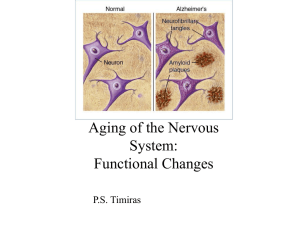
AChE inhibitor
... For further information on brain plasticity in old age and factors which may enhance this plasticity, see the below papers (full texts are available on the course website under “Relevant Articles”): • Merabet LB et al. What blindness can tell us about seeing again: merging neuroplasticity and neuro ...
... For further information on brain plasticity in old age and factors which may enhance this plasticity, see the below papers (full texts are available on the course website under “Relevant Articles”): • Merabet LB et al. What blindness can tell us about seeing again: merging neuroplasticity and neuro ...

Pediatric Epilepsy and Depression
... Treatment Depression For medications, the treatment of choice is a type of antidepressant called selective serotonin reuptake inhibitors (SSRIs). For therapy choices, cognitive behavioral therapy (CBT) is discussed below under psychotherapy. ...
... Treatment Depression For medications, the treatment of choice is a type of antidepressant called selective serotonin reuptake inhibitors (SSRIs). For therapy choices, cognitive behavioral therapy (CBT) is discussed below under psychotherapy. ...

Depression in Hepatitis C Patients and Interferon Treatment
... The Johns Hopkins University School of Medicine ...
... The Johns Hopkins University School of Medicine ...

here> do not exceed two lines of text here
... • Anxiety and depression are associated with hospitalisation, length of stay and post-discharge mortality • Depression is associated with continued smoking and poorer physical and social functioning, and is untreated in a majority of cases (Ng et al, 2007; Pooler and Beech, 2014) • Anxiety is common ...
... • Anxiety and depression are associated with hospitalisation, length of stay and post-discharge mortality • Depression is associated with continued smoking and poorer physical and social functioning, and is untreated in a majority of cases (Ng et al, 2007; Pooler and Beech, 2014) • Anxiety is common ...
Treatments for Mood Disorders
... If drugs are stopped immediately upon relief of symptoms, most patients relapse within one year ...
... If drugs are stopped immediately upon relief of symptoms, most patients relapse within one year ...

Mood Disorders, Dissociation, Schizophrenia, and Personality
... sexual or emotional abuse – a home environment that is otherwise frightening or highly unpredictable. – A child who learns to dissociate in order to endure an extended period of his or her youth may use this coping mechanism in response to stressful situations throughout life. ...
... sexual or emotional abuse – a home environment that is otherwise frightening or highly unpredictable. – A child who learns to dissociate in order to endure an extended period of his or her youth may use this coping mechanism in response to stressful situations throughout life. ...

Functional illness in elderly
... SPECT: reduced cerebral blood flow, sparing the posterior parietal cortex ...
... SPECT: reduced cerebral blood flow, sparing the posterior parietal cortex ...

Mood Disorders
... o The amine theory: The discovery that all antidepressants increase monoamines((serotonin,noradrenaline,and dopamine ) release and /or reduce their reuptake in the synaptic cleft, led to the development of the monoamine theory of Depression, which suggests that reduced monoamine function may cause d ...
... o The amine theory: The discovery that all antidepressants increase monoamines((serotonin,noradrenaline,and dopamine ) release and /or reduce their reuptake in the synaptic cleft, led to the development of the monoamine theory of Depression, which suggests that reduced monoamine function may cause d ...

DSRS - Registry of Scales and Measures
... These figures assume a prevalence of depressive disorder of approximately 5% in a clinic population. While those with a depression diagnosis scored highly, it was noted that many other children with dysphoric mood also scored over 15. These were children with a range of other diagnoses including con ...
... These figures assume a prevalence of depressive disorder of approximately 5% in a clinic population. While those with a depression diagnosis scored highly, it was noted that many other children with dysphoric mood also scored over 15. These were children with a range of other diagnoses including con ...

Premenstrual syndrome (PMS) - The University of Western Australia
... The serotonergic system is complex and involves numerous serotonin postsynaptic receptors, and dysregulation of postsynaptic serotonergic function has been implicated in depression5, as a function of serotonin, is to control of mood and emotion6. Clinical studies suggest that serotonin exerts an inh ...
... The serotonergic system is complex and involves numerous serotonin postsynaptic receptors, and dysregulation of postsynaptic serotonergic function has been implicated in depression5, as a function of serotonin, is to control of mood and emotion6. Clinical studies suggest that serotonin exerts an inh ...
Limbic system
... dependence. The stress hormone corticosterone reduces the effects of nicotine; therefore, more nicotine must be consumed to achieve the same effect. This increases tolerance to nicotine and leads to increased dependence. Studies in animals have also shown that stress can directly cause relapse to ni ...
... dependence. The stress hormone corticosterone reduces the effects of nicotine; therefore, more nicotine must be consumed to achieve the same effect. This increases tolerance to nicotine and leads to increased dependence. Studies in animals have also shown that stress can directly cause relapse to ni ...

Mood Disorders, Dissociation, Schizophrenia, and Personality
... sexual or emotional abuse – a home environment that is otherwise frightening or highly unpredictable. – A child who learns to dissociate in order to endure an extended period of his or her youth may use this coping mechanism in response to stressful situations throughout life. ...
... sexual or emotional abuse – a home environment that is otherwise frightening or highly unpredictable. – A child who learns to dissociate in order to endure an extended period of his or her youth may use this coping mechanism in response to stressful situations throughout life. ...
MH 3.1 Personality Disorders, Schizophrenia, Bipolar
... During our teenage years we are struggling with identity, how to gain control over, and express our emotions. Moods of adolescents commonly swing from feeling vulnerable to dependent to knowing that they are the smartest on in their family. (remember? I do!) ...
... During our teenage years we are struggling with identity, how to gain control over, and express our emotions. Moods of adolescents commonly swing from feeling vulnerable to dependent to knowing that they are the smartest on in their family. (remember? I do!) ...


Podcast Script – Information about MDD for Parents and
... with eating disorders, such as bulimia and anorexia (American Psychiatric Association, 2000, Associated Feature and Disorders, ¶ 1). Suicidal ideation, or having thoughts about harming himself or herself, is common as well. Psychiatrists report (American Psychiatric Association, 2000) that up to fi ...
... with eating disorders, such as bulimia and anorexia (American Psychiatric Association, 2000, Associated Feature and Disorders, ¶ 1). Suicidal ideation, or having thoughts about harming himself or herself, is common as well. Psychiatrists report (American Psychiatric Association, 2000) that up to fi ...
Biology of depression

Scientific studies have found that numerous brain areas show altered activity in patients suffering from depression, and this has encouraged advocates of various theories that seek to identify a biochemical origin of the disease, as opposed to theories that emphasize psychological or situational causes. Several theories concerning the biologically based cause of depression have been suggested over the years, of which the most prominent and widely researched is the monoamine hypothesis.