
Candy Dish Selection: Author
... •increased probability of acquiring genetic diseases and deformities •Gives an idea of the number of genes, the variety of genes and the type of genes existing in a population. It can be used to help determine gene frequencies or the ratio between different types of genes in a population. ...
... •increased probability of acquiring genetic diseases and deformities •Gives an idea of the number of genes, the variety of genes and the type of genes existing in a population. It can be used to help determine gene frequencies or the ratio between different types of genes in a population. ...


evolution - Living Environment
... Islands. Darwin based his theory on his own observations and the work of previous scientists. For inst geologist Charles Lyell argued in 1830 that the Earth was formed through gradual, slow-moving proc This helped give Darwin the idea that living things might also evolve. The English economist Thoma ...
... Islands. Darwin based his theory on his own observations and the work of previous scientists. For inst geologist Charles Lyell argued in 1830 that the Earth was formed through gradual, slow-moving proc This helped give Darwin the idea that living things might also evolve. The English economist Thoma ...

Evidence of Evolution $200
... The brown-camouflaged butterfly and the greencamouflaged butterfly are surviving very well together in the Gwinnett forest. The palecamouflaged butterfly is not having the same type of luck. The brown-camouflaged butterfly can blend in with the brown trees. The green-camouflaged butterfly can blend ...
... The brown-camouflaged butterfly and the greencamouflaged butterfly are surviving very well together in the Gwinnett forest. The palecamouflaged butterfly is not having the same type of luck. The brown-camouflaged butterfly can blend in with the brown trees. The green-camouflaged butterfly can blend ...

An Evolutionary - University of Virginia Information Technology
... different; and what determines how those differences affect the probability that a given unit will survive long enough to reproduce; and, finally, accept that equilibria are unstable and that evolution has no final stopping point. So first, evolution assumes a population of dissimilar units – both i ...
... different; and what determines how those differences affect the probability that a given unit will survive long enough to reproduce; and, finally, accept that equilibria are unstable and that evolution has no final stopping point. So first, evolution assumes a population of dissimilar units – both i ...

Lecture 6 Darwin - Bruce Rife`s Web Page
... presented his theory in public. When FitzRoy's account was published in May 1839, Darwin's Journal and Remarks was a great success. Later that year it was published on its own, becoming the bestseller nowadays known as The Voyage of the Beagle. Darwin made attempts to explain his theory to close fri ...
... presented his theory in public. When FitzRoy's account was published in May 1839, Darwin's Journal and Remarks was a great success. Later that year it was published on its own, becoming the bestseller nowadays known as The Voyage of the Beagle. Darwin made attempts to explain his theory to close fri ...

Chapter 15 Evolution
... islands was new to European scientists. Populations from the mainland changed after reaching the Galápagos. ...
... islands was new to European scientists. Populations from the mainland changed after reaching the Galápagos. ...

Chapter 15
... Which was Charles Darwin’s only qualification for his position as naturalist on the Beagle? A. a degree in theology B. an interest in science C. a knowledge of biology D. an understanding of geology ...
... Which was Charles Darwin’s only qualification for his position as naturalist on the Beagle? A. a degree in theology B. an interest in science C. a knowledge of biology D. an understanding of geology ...
NEO-DARWINISM AND ITS RELIGIOUS IMPLICATIONS
... perspective. I, however, will suggest a kind of criticism that could, at least in principle, be acceptable to the scientific community. In a second chapter, later in this volume, I spell out a Whiteheadian alternative to neo-Darwinism that is meant to be superior for scientific purposes as well as f ...
... perspective. I, however, will suggest a kind of criticism that could, at least in principle, be acceptable to the scientific community. In a second chapter, later in this volume, I spell out a Whiteheadian alternative to neo-Darwinism that is meant to be superior for scientific purposes as well as f ...

Evolution
... C. A small group has developed mating behaviors that are different than those of the rest of the population. D. Some members from a population have developed population to adapt to different environments. ...
... C. A small group has developed mating behaviors that are different than those of the rest of the population. D. Some members from a population have developed population to adapt to different environments. ...

Stabilizing selection
... selection, is a descriptive term used to describe changes in population genetics that simultaneously favor individuals at both extremes of the distribution. Individuals at the extremes contribute more offspring than those in the center, producing two peaks in the distribution of a particular trait ...
... selection, is a descriptive term used to describe changes in population genetics that simultaneously favor individuals at both extremes of the distribution. Individuals at the extremes contribute more offspring than those in the center, producing two peaks in the distribution of a particular trait ...

Origin Species Charles Darwin
... on the origin of species wikipedia - on the origin of species charles darwin s grandfather erasmus darwin outlined a hypothesis of transmutation of species in the 1790s, on the origin of species charles darwin 9781619491304 - buy on the origin of species on amazon com free shipping on qualified orde ...
... on the origin of species wikipedia - on the origin of species charles darwin s grandfather erasmus darwin outlined a hypothesis of transmutation of species in the 1790s, on the origin of species charles darwin 9781619491304 - buy on the origin of species on amazon com free shipping on qualified orde ...

BSCS Biology - A Molecular Approach
... discuss the most recent discoveries about human evolution; and celebrities warn about overpopulation, starvation, and threats to tropical rain forests. Although such issues may appear unrelated at first, they illustrate a rather small number of major principles that are common to all living systems. ...
... discuss the most recent discoveries about human evolution; and celebrities warn about overpopulation, starvation, and threats to tropical rain forests. Although such issues may appear unrelated at first, they illustrate a rather small number of major principles that are common to all living systems. ...
The Origin of Species
... environment and the origin of new species as closely related processes環境 適應為新種演化之過程 • From studies made years after Darwin’s voyage, biologists have concluded that this is what happened to the Galápagos finches雲雀 © 2011 Pearson Education, Inc. ...
... environment and the origin of new species as closely related processes環境 適應為新種演化之過程 • From studies made years after Darwin’s voyage, biologists have concluded that this is what happened to the Galápagos finches雲雀 © 2011 Pearson Education, Inc. ...

Evolution - schmitzhappens12-13
... Darwin’s role on the ship was as naturalist and companion to the captain. His job was to collect biological and geological specimens during the ship’s travel. ...
... Darwin’s role on the ship was as naturalist and companion to the captain. His job was to collect biological and geological specimens during the ship’s travel. ...

Evolution
... Darwin’s role on the ship was as naturalist and companion to the captain. His job was to collect biological and geological specimens during the ship’s travel. ...
... Darwin’s role on the ship was as naturalist and companion to the captain. His job was to collect biological and geological specimens during the ship’s travel. ...

REvolver: Modeling Sequence Evolution under Domain Constraints
... • Emission probabilities as site-specific AA frequnces • Indels preferrably placed at positions where they have been observed in real instances • No formation of repeated nested insertions • Information about site-specific evolutionary constraints maintained throughout the simulation • Prevents a si ...
... • Emission probabilities as site-specific AA frequnces • Indels preferrably placed at positions where they have been observed in real instances • No formation of repeated nested insertions • Information about site-specific evolutionary constraints maintained throughout the simulation • Prevents a si ...

Chapter 4 outline and section review answers
... population of a species becomes extinct over a large region, but not globally (local extinction). Species that are found in only one area are called endemic species and are especially vulnerable to extinction because they are unlikely to be able to migrate or adapt in the face of rapidly changing ...
... population of a species becomes extinct over a large region, but not globally (local extinction). Species that are found in only one area are called endemic species and are especially vulnerable to extinction because they are unlikely to be able to migrate or adapt in the face of rapidly changing ...

BIOLOGY UNIT #3: EVOLUTION MECHANISMS
... descendants of a small group of Africans to occupy even the farthest reaches of the Earth and have left a dramatic impact on the human gene pool. A map of the migrations is shown at the website. The class examines the migration routes (see website) to determine when humans left Africa, where they mi ...
... descendants of a small group of Africans to occupy even the farthest reaches of the Earth and have left a dramatic impact on the human gene pool. A map of the migrations is shown at the website. The class examines the migration routes (see website) to determine when humans left Africa, where they mi ...

Syllabus for “Darwin`s Origin of Species and Descent of Man.
... 2) Indicate the logical features of the argument and the evidence for the conclusion. 3) Mention the kinds of rhetorical devices he uses. 4) Evaluate the persuasiveness of the argument found in the text. c. The longer paper can be on any topic derived from the course. It should focus on the primary ...
... 2) Indicate the logical features of the argument and the evidence for the conclusion. 3) Mention the kinds of rhetorical devices he uses. 4) Evaluate the persuasiveness of the argument found in the text. c. The longer paper can be on any topic derived from the course. It should focus on the primary ...

Fall Focus on Books - University of California, Riverside
... mechanism per se versus those aimed at showing how natural selection causes the formation of new species. Accordingly, Reznick divides The Origin Then and Now into three parts: Part one, “Natural Selection,” summarizes Darwin’s arguments in Origin chapters I–V, which set up natural selection as a me ...
... mechanism per se versus those aimed at showing how natural selection causes the formation of new species. Accordingly, Reznick divides The Origin Then and Now into three parts: Part one, “Natural Selection,” summarizes Darwin’s arguments in Origin chapters I–V, which set up natural selection as a me ...

Discussion Guide - Discovery Institute
... The Burgess Bestiary the fossils of the Burgess Shale in the Canadian Rockies reveal a stunning assortment of animal diversity, including oddball creatures unlike any living phyla. All told, representatives of about twenty of the roughly twenty-six total animal phyla known from the entire fossil rec ...
... The Burgess Bestiary the fossils of the Burgess Shale in the Canadian Rockies reveal a stunning assortment of animal diversity, including oddball creatures unlike any living phyla. All told, representatives of about twenty of the roughly twenty-six total animal phyla known from the entire fossil rec ...
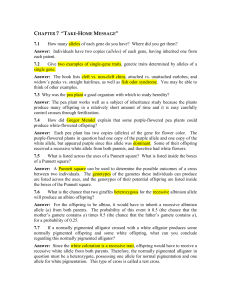
Exam Three Study Guide - The Seven Minute Scientist
... 10.9 Which is a better indicator of a close evolutionary relationship, similarities in structure or similarities in DNA sequences? Explain. Answer: Similarities in structure are commonly a result of shared ancestry (homologous features), but are sometimes the result of independent evolution in respo ...
... 10.9 Which is a better indicator of a close evolutionary relationship, similarities in structure or similarities in DNA sequences? Explain. Answer: Similarities in structure are commonly a result of shared ancestry (homologous features), but are sometimes the result of independent evolution in respo ...

Lab Summary In this lab, students experimentally evolve single
... In this lab, students experimentally evolve single-celled Baker’s yeast into a novel multicellular organism. Using simple and safe methods, students can directly examine the evolution of multicellular clusters and the process of cluster-level adaptation as the yeast evolve as multicellular individua ...
... In this lab, students experimentally evolve single-celled Baker’s yeast into a novel multicellular organism. Using simple and safe methods, students can directly examine the evolution of multicellular clusters and the process of cluster-level adaptation as the yeast evolve as multicellular individua ...

Ch. 15 Exam Review
... ____ 2. The term half-life is used to indicate when an organism’s life span is half over. ____ 3. Mass extinctions are long periods during which few species disappeared. ____ 4. The theory of evolution states that species change over time. ____ 5. Evidence for evolution occurs only in the fossil rec ...
... ____ 2. The term half-life is used to indicate when an organism’s life span is half over. ____ 3. Mass extinctions are long periods during which few species disappeared. ____ 4. The theory of evolution states that species change over time. ____ 5. Evidence for evolution occurs only in the fossil rec ...