`Survival of the Fittest` in Darwinian Metaphysics: Tautology or
... proteins back to the DNA, phenotypes (in contrast to genotypes) are regarded as mere 'puppets' or vehicles of the genes (germ-line reductionism). Second, gene-Darwinism radicalizes the neo-Darwinian stress on natural selection by consistently advocating process reductionism, reducing all processes o ...
... proteins back to the DNA, phenotypes (in contrast to genotypes) are regarded as mere 'puppets' or vehicles of the genes (germ-line reductionism). Second, gene-Darwinism radicalizes the neo-Darwinian stress on natural selection by consistently advocating process reductionism, reducing all processes o ...
The structure of evolution by natural selection
... is captured in Robert Brandon’s law, or principle, (D), called by him (and others) the PNS: (D) If a is better adapted (more fit) than b in environment E, then (probably) a will have more (sufficiently similar) offspring than b in E.7 There has been a persistent worry, though, that this generality is ei ...
... is captured in Robert Brandon’s law, or principle, (D), called by him (and others) the PNS: (D) If a is better adapted (more fit) than b in environment E, then (probably) a will have more (sufficiently similar) offspring than b in E.7 There has been a persistent worry, though, that this generality is ei ...
Sexual reproduction, in one form
... studies, explanations for differences in mutation accumulation other than the presence or absence of sexual reproduction must also be considered, such as a more stringent ‘selection arena’37,38 during sexual reproduction, or differences in the effective sizes of sexual and asexual populations. Altog ...
... studies, explanations for differences in mutation accumulation other than the presence or absence of sexual reproduction must also be considered, such as a more stringent ‘selection arena’37,38 during sexual reproduction, or differences in the effective sizes of sexual and asexual populations. Altog ...

Museum Visitors` Understanding of Evolution
... (Dunckel et al. 2005), approximately one-third of visitors in this study used natural selection to explain how cheetahs evolved from a slower ancestor. An additional 39% of visitors provided explanations that did not conflict with modern evolutionary theory, but did not reference natural selection s ...
... (Dunckel et al. 2005), approximately one-third of visitors in this study used natural selection to explain how cheetahs evolved from a slower ancestor. An additional 39% of visitors provided explanations that did not conflict with modern evolutionary theory, but did not reference natural selection s ...

Law and Evolutionary Biology - CUA Law Scholarship Repository
... Most of the traits that define the majority of living organisms are genetically influenced. While people tend to think of genes as merely the tives, devalued by the degree of genetic relatedness. For a useful summary of the mechanism of natural selection, see DALY & WILSON, supra note 5, at 2-5. The ...
... Most of the traits that define the majority of living organisms are genetically influenced. While people tend to think of genes as merely the tives, devalued by the degree of genetic relatedness. For a useful summary of the mechanism of natural selection, see DALY & WILSON, supra note 5, at 2-5. The ...
Does Biology Have Laws? The Experimental Evidence
... decreasedin evolutionarybiology. It is the basis for the applicationof the theory of natural selection to populations. But the importanceof testingit has certainlydeclinedwith each new demonstrationof natural selection. On the other hand, some "hypotheses" are not important enough to be so called. O ...
... decreasedin evolutionarybiology. It is the basis for the applicationof the theory of natural selection to populations. But the importanceof testingit has certainlydeclinedwith each new demonstrationof natural selection. On the other hand, some "hypotheses" are not important enough to be so called. O ...
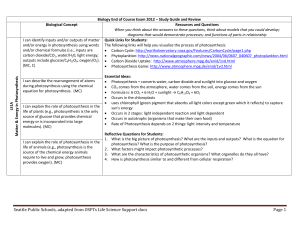
Biology EOC Study Guide
... of parents. I can describe the process of fertilization as restoring the original chromosome number (e.g., an egg and sperm, each with half the number of chromosomes of the original cell, combine to restore the number of chromosomes from the original cell). I can describe that the process of fertili ...
... of parents. I can describe the process of fertilization as restoring the original chromosome number (e.g., an egg and sperm, each with half the number of chromosomes of the original cell, combine to restore the number of chromosomes from the original cell). I can describe that the process of fertili ...

Biology End of Course Exam 2012 – Study Guide and... Biological Concept
... of parents. I can describe the process of fertilization as restoring the original chromosome number (e.g., an egg and sperm, each with half the number of chromosomes of the original cell, combine to restore the number of chromosomes from the original cell). I can describe that the process of fertili ...
... of parents. I can describe the process of fertilization as restoring the original chromosome number (e.g., an egg and sperm, each with half the number of chromosomes of the original cell, combine to restore the number of chromosomes from the original cell). I can describe that the process of fertili ...

big study guide
... of parents. I can describe the process of fertilization as restoring the original chromosome number (e.g., an egg and sperm, each with half the number of chromosomes of the original cell, combine to restore the number of chromosomes from the original cell). I can describe that the process of fertili ...
... of parents. I can describe the process of fertilization as restoring the original chromosome number (e.g., an egg and sperm, each with half the number of chromosomes of the original cell, combine to restore the number of chromosomes from the original cell). I can describe that the process of fertili ...

EOC review guide
... of parents. I can describe the process of fertilization as restoring the original chromosome number (e.g., an egg and sperm, each with half the number of chromosomes of the original cell, combine to restore the number of chromosomes from the original cell). I can describe that the process of fertili ...
... of parents. I can describe the process of fertilization as restoring the original chromosome number (e.g., an egg and sperm, each with half the number of chromosomes of the original cell, combine to restore the number of chromosomes from the original cell). I can describe that the process of fertili ...


Signatures of Natural Selection and Ecological Differentiation in
... sequence-based statistical tests to identify genes under positive selection – in order to discover ecologically distinct populations and how they adapt to different niches. Our motivation for this line of research could be driven by basic curiosity about the microbial world, but could also have prac ...
... sequence-based statistical tests to identify genes under positive selection – in order to discover ecologically distinct populations and how they adapt to different niches. Our motivation for this line of research could be driven by basic curiosity about the microbial world, but could also have prac ...

eMind Alignment Chart - Expandable Mind Software
... genetic variations may result from: (1) new genetic combinations through meiosis, (2) viable errors occurring during replication, and/or (3) mutations caused by environmental factors. HS.LS3.3 Apply concepts of statistics and probability to explain the variation and distribution of expressed traits ...
... genetic variations may result from: (1) new genetic combinations through meiosis, (2) viable errors occurring during replication, and/or (3) mutations caused by environmental factors. HS.LS3.3 Apply concepts of statistics and probability to explain the variation and distribution of expressed traits ...

Biology EOC Study Guide - Bremerton School District
... Process by which the chemical energy of "food" molecules is released and partially captured in the form of ATP. Carbohydrates, fats, and proteins can all be used as fuels in cellular respiration, but glucose is most commonly used as an example to examine the reactions and pathways involved. Form ...
... Process by which the chemical energy of "food" molecules is released and partially captured in the form of ATP. Carbohydrates, fats, and proteins can all be used as fuels in cellular respiration, but glucose is most commonly used as an example to examine the reactions and pathways involved. Form ...

Taking Evolution Seriously: Historical Institutionalism and
... dangerous. This perception is in part traceable to the revulsion at the warped interpretations of Darwin’s theory advanced in the late nineteenth century by Herbert Spencer, William Graham Sumner, and other “social Darwinists,” to subsequent noxious ideologies and theories of racialism, and, more re ...
... dangerous. This perception is in part traceable to the revulsion at the warped interpretations of Darwin’s theory advanced in the late nineteenth century by Herbert Spencer, William Graham Sumner, and other “social Darwinists,” to subsequent noxious ideologies and theories of racialism, and, more re ...

Evolution by Natural Selection
... If a mouse's fur colour is generally similar to its mother’s colour, what colour fur would be most common among the pups? A characteristic which is influenced by genes and passed from parents to offspring is called heritable. Over many generations heritable adaptive characteristics become more commo ...
... If a mouse's fur colour is generally similar to its mother’s colour, what colour fur would be most common among the pups? A characteristic which is influenced by genes and passed from parents to offspring is called heritable. Over many generations heritable adaptive characteristics become more commo ...
15-3 - CP Biology Overview
... Because more organisms are produced than can survive, they compete for limited resources. Slide 32 of 41 Copyright Pearson Prentice Hall ...
... Because more organisms are produced than can survive, they compete for limited resources. Slide 32 of 41 Copyright Pearson Prentice Hall ...
15-3 Darwin Presents His Case
... Because more organisms are produced than can survive, they compete for limited resources. Slide 32 of 41 Copyright Pearson Prentice Hall ...
... Because more organisms are produced than can survive, they compete for limited resources. Slide 32 of 41 Copyright Pearson Prentice Hall ...

Biology A
... I can diagram and explain, using evidence, how variation is preserved or eliminated new species arise from a population through natural selection (evolution) resulting in biodiversity 29 Construct an explana ...
... I can diagram and explain, using evidence, how variation is preserved or eliminated new species arise from a population through natural selection (evolution) resulting in biodiversity 29 Construct an explana ...

Pretest Student Key
... figures shown above on your paper? • A. New genetic instructions have been disregarded in the evolution of vertebrates. • B. Early in development, vertebrate embryos show no evidence of common ancestry. • C. The evolutionary history of organisms is evident in the way embryos develop. • D. All adult ...
... figures shown above on your paper? • A. New genetic instructions have been disregarded in the evolution of vertebrates. • B. Early in development, vertebrate embryos show no evidence of common ancestry. • C. The evolutionary history of organisms is evident in the way embryos develop. • D. All adult ...

Document
... • Variable traits in a population may be: – Polygenic, resulting from the combined effects of several genes or – Determined by a single gene ...
... • Variable traits in a population may be: – Polygenic, resulting from the combined effects of several genes or – Determined by a single gene ...

Teaching Through Science Trade Books MacLaren Stephanie
... The theory of evolution states that the first life appeared on Earth about three to four billion years ago, after the planet’s crust formed and cooled to a livable temperature. The first living things believed to appear on the planet were microscopic single celled organisms. Eventually, these simple ...
... The theory of evolution states that the first life appeared on Earth about three to four billion years ago, after the planet’s crust formed and cooled to a livable temperature. The first living things believed to appear on the planet were microscopic single celled organisms. Eventually, these simple ...
AP Biology - Macomb Intermediate School District
... Chapter 14 The Chromosomal Basis of Inheritance • Mendelian inheritance has its physical basis in the behavior of chromosomes during sexual life cycles~regulation • Morgan traced a gene to a specific chromosome: science as a process ...
... Chapter 14 The Chromosomal Basis of Inheritance • Mendelian inheritance has its physical basis in the behavior of chromosomes during sexual life cycles~regulation • Morgan traced a gene to a specific chromosome: science as a process ...

ALFRED RUSSEL WALLACE AND THE DARWINIAN SPECIES
... description of some 20 new species. Wallace argued that the Papilionidae were the most advanced butterflies, against some of his colleagues such as Bates and Trimen who had claimed that the Nymphalidae were more advanced because of their possession of vestigial forelegs. In a very important section, ...
... description of some 20 new species. Wallace argued that the Papilionidae were the most advanced butterflies, against some of his colleagues such as Bates and Trimen who had claimed that the Nymphalidae were more advanced because of their possession of vestigial forelegs. In a very important section, ...