
Q24 Describe the mechanism of action of the
... o Kappa (KOP) – contribute to analgesia at the spinal level; does not tend to cause respiratory depression o Delta (DOP) – less widely distributed; also contributes to analgesia o NOP – produces effects si ...
... o Kappa (KOP) – contribute to analgesia at the spinal level; does not tend to cause respiratory depression o Delta (DOP) – less widely distributed; also contributes to analgesia o NOP – produces effects si ...

Preschool Depression: The Importance of Identification of
... mental disorders has been previously outlined by Robins and Guze (1970). This method, similar to that used for validating general medical disorders, revolutionized the understanding of mental disorders in the context of the medical model. This was also instrumental in the development of the Diagnost ...
... mental disorders has been previously outlined by Robins and Guze (1970). This method, similar to that used for validating general medical disorders, revolutionized the understanding of mental disorders in the context of the medical model. This was also instrumental in the development of the Diagnost ...

Introduction to Working with the Asian Patient in Primary Care
... When ill, majority of time is spent depressed (30/1). Patients usually do not view hypomanic episodes as pathologic (nor are they). Patients frequently do not have classic presentations. High levels of psychiatric co-morbidity: anxiety disorders, substance abuse disorders, ADHD, personality disorder ...
... When ill, majority of time is spent depressed (30/1). Patients usually do not view hypomanic episodes as pathologic (nor are they). Patients frequently do not have classic presentations. High levels of psychiatric co-morbidity: anxiety disorders, substance abuse disorders, ADHD, personality disorder ...

Comparison of alterations in cerebral hemoglobin oxygenation in
... changes in rCBF [31]. After averaging the results of three consecutive runs of the same task for each participant, a baseline correction was performed setting the amount of change in [oxy-Hb] at the start of the task as zero. We defined cortical activation as the difference between average [oxy-Hb] ...
... changes in rCBF [31]. After averaging the results of three consecutive runs of the same task for each participant, a baseline correction was performed setting the amount of change in [oxy-Hb] at the start of the task as zero. We defined cortical activation as the difference between average [oxy-Hb] ...

Bipolar Disorder - Fulfillment Using Real Conscience
... Patients with Bipolar Disorder face up to ten years of coping with symptoms before receiving an accurate diagnosis. Nearly 9 out of 10 patients with bipolar disorder are satisfied with their current medication(s), although side effects remain a problem. Participation in a Depression and Bipolar Supp ...
... Patients with Bipolar Disorder face up to ten years of coping with symptoms before receiving an accurate diagnosis. Nearly 9 out of 10 patients with bipolar disorder are satisfied with their current medication(s), although side effects remain a problem. Participation in a Depression and Bipolar Supp ...
PDF - ib psych notes
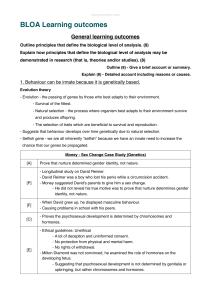
... - Suffered damage in Hippocampus due to a contraction of a virus. - His disease left him with extensive brain damage (parts of his temporal lobes). - Suffers from Retrograde and Anterograde amnesia. - MRI scanning show damage to the hippocampus and some of frontal regions. - Episodic memory and some ...
... - Suffered damage in Hippocampus due to a contraction of a virus. - His disease left him with extensive brain damage (parts of his temporal lobes). - Suffers from Retrograde and Anterograde amnesia. - MRI scanning show damage to the hippocampus and some of frontal regions. - Episodic memory and some ...

PDF
... drinking lattes, their brains are being pruned. Unneeded neurons fade away, leaving room for the great meet-and-greet of white matter that develops as fibers from remaining cells make new contacts. Millions of them. The changes underlie the switchover to the quickened mental processing, the ability ...
... drinking lattes, their brains are being pruned. Unneeded neurons fade away, leaving room for the great meet-and-greet of white matter that develops as fibers from remaining cells make new contacts. Millions of them. The changes underlie the switchover to the quickened mental processing, the ability ...

Potential Utility of Optogenetics in the Study of
... Frontal leukotomies were replaced by more focalized lesions using stereotactic techniques. Areas targeted by these surgical procedures included the cingulate gyrus (i.e., cingulotomy), the subcaudate area to disrupt projections from orbitofrontal cortex to subcortical structures (i.e., subcaudate tr ...
... Frontal leukotomies were replaced by more focalized lesions using stereotactic techniques. Areas targeted by these surgical procedures included the cingulate gyrus (i.e., cingulotomy), the subcaudate area to disrupt projections from orbitofrontal cortex to subcortical structures (i.e., subcaudate tr ...

Basile, 1999
... This gene encodes the D3 subtype of the dopamine receptor. The D3 subtype inhibits adenylyl cyclase through inhibitory G-proteins. This receptor is expressed in phylogenetically older regions of the brain, suggesting that this receptor plays a role in cognitive and emotional functions. It is a targe ...
... This gene encodes the D3 subtype of the dopamine receptor. The D3 subtype inhibits adenylyl cyclase through inhibitory G-proteins. This receptor is expressed in phylogenetically older regions of the brain, suggesting that this receptor plays a role in cognitive and emotional functions. It is a targe ...

The classification of depression: are we still confused?
... Survey testify.11 This poses important questions for the treatment of comorbidity12 and also future diagnostic systems. Moffitt and colleagues recently attempted to address this issue from a prospective, longitudinal approach.13 They reported that 72% of individuals with generalised anxiety disorder ...
... Survey testify.11 This poses important questions for the treatment of comorbidity12 and also future diagnostic systems. Moffitt and colleagues recently attempted to address this issue from a prospective, longitudinal approach.13 They reported that 72% of individuals with generalised anxiety disorder ...

GLAD PC
... Recommendation IV: PC clinicians should actively support depressed adolescents referred to mental health to ensure adequate management. PC clinicians may also consider sharing care with mental health services where possible. Appropriate roles and responsibilities, and co-ordination of care, should b ...
... Recommendation IV: PC clinicians should actively support depressed adolescents referred to mental health to ensure adequate management. PC clinicians may also consider sharing care with mental health services where possible. Appropriate roles and responsibilities, and co-ordination of care, should b ...

Adolescent Brain
... Alcohol inhibits excitatory neurotransmission by inhibiting both NMDA and non-NMDA(kainite and AMPA) receptors. Up-regulation of these receptors to compensate for alcohol’s antagonistic ...
... Alcohol inhibits excitatory neurotransmission by inhibiting both NMDA and non-NMDA(kainite and AMPA) receptors. Up-regulation of these receptors to compensate for alcohol’s antagonistic ...

No Slide Title
... Dopamine (continued). Dopamine has been implicated in several important functions including movement, attention and learning. Degeneration of dopaminergic neurons in the substantia nigra (part of the basal ganglia) causes Parkinson's disease, some symptoms of which can be alleviated by the drug ...
... Dopamine (continued). Dopamine has been implicated in several important functions including movement, attention and learning. Degeneration of dopaminergic neurons in the substantia nigra (part of the basal ganglia) causes Parkinson's disease, some symptoms of which can be alleviated by the drug ...

MOOD DISORDERS LEARNING OBJECTIVES Describe the clinical
... Depressed mood most of the day (must include 1 or 2) Anhedonia diminished interest or pleasure in all or most activities (must include 1 or 2) Appetite changes including significant unintentional weight loss or gain Sleep changes insomnia or sleeping too much Psychomotor symptoms of agitation or ret ...
... Depressed mood most of the day (must include 1 or 2) Anhedonia diminished interest or pleasure in all or most activities (must include 1 or 2) Appetite changes including significant unintentional weight loss or gain Sleep changes insomnia or sleeping too much Psychomotor symptoms of agitation or ret ...
Depression Associated with Physical Illness
... It is frequent for affective symptoms such as depressive mood, decreased spontaneity, affective lability, sadness, affective flattening, and anxiety/impatience to occur as prodromal symptoms of dementia in the early stage of Alzheimer’s disease. In these cases, anxiety, depressive mood, behavioral r ...
... It is frequent for affective symptoms such as depressive mood, decreased spontaneity, affective lability, sadness, affective flattening, and anxiety/impatience to occur as prodromal symptoms of dementia in the early stage of Alzheimer’s disease. In these cases, anxiety, depressive mood, behavioral r ...

Human Behavior
... the sympathetic nervous system and produce feelings of optimism and boundless energy Caffeine lengthens the time it take to fall asleep ...
... the sympathetic nervous system and produce feelings of optimism and boundless energy Caffeine lengthens the time it take to fall asleep ...

The Interface of Coronary Artery Disease and Depression
... proteins that have been extensively implicated in the process of inflammation. One of the major subset of mediator contributing in the interaction between inflammatory cells and endothelial and smooth muscle cells and the subsequent perpetuation of the inflammatory reaction are cytokines, especially ...
... proteins that have been extensively implicated in the process of inflammation. One of the major subset of mediator contributing in the interaction between inflammatory cells and endothelial and smooth muscle cells and the subsequent perpetuation of the inflammatory reaction are cytokines, especially ...

The Edinburgh Postnatal Depression Scale (EPDS)
... year following the birth of a child. The EPDS was developed to assist primary care health professionals in detecting mothers suffering from Postpartum Depression, a distressing disorder more prolonged than the "baby blues,” which occurs in the first week after delivery, and resolves within two to th ...
... year following the birth of a child. The EPDS was developed to assist primary care health professionals in detecting mothers suffering from Postpartum Depression, a distressing disorder more prolonged than the "baby blues,” which occurs in the first week after delivery, and resolves within two to th ...

pdf - Shalem Mental Health Network
... challenges. Depression can be one of those challenges. It has no single cause and is often quite misunderstood both by those who experience it and by others around them. The World Health Organization predicts that depression will become the second leading cause of disability worldwide by the year 20 ...
... challenges. Depression can be one of those challenges. It has no single cause and is often quite misunderstood both by those who experience it and by others around them. The World Health Organization predicts that depression will become the second leading cause of disability worldwide by the year 20 ...

Brain Structure and Function
... autonomic, emotional, endocrine and somatic function. Has a direct involvement in stress and ...
... autonomic, emotional, endocrine and somatic function. Has a direct involvement in stress and ...

Slide 1
... suicidality, DD, subthreshold symptoms, depressotypic cognitive style, recent stressful life events, adverse family environments, family history of MDD ...
... suicidality, DD, subthreshold symptoms, depressotypic cognitive style, recent stressful life events, adverse family environments, family history of MDD ...

mental health in mn refugee populations
... 4% of the refugees were reported to have Generalized Anxiety Disorder 9% adults were diagnosed with post-traumatic stress disorder 44% of refugees with PTSD also had major depression 11% of 260 refugee children from three countries met criteria for PTSD ...
... 4% of the refugees were reported to have Generalized Anxiety Disorder 9% adults were diagnosed with post-traumatic stress disorder 44% of refugees with PTSD also had major depression 11% of 260 refugee children from three countries met criteria for PTSD ...

Bipolar disorder
... A patient with bipolar 1 disorder who has had 2 or more acute episodes A aptient with bipolar 2 disorder who has significant functional impairment, is at risk of suicide or has frequent episodes. ...
... A patient with bipolar 1 disorder who has had 2 or more acute episodes A aptient with bipolar 2 disorder who has significant functional impairment, is at risk of suicide or has frequent episodes. ...
Psychopharmacology ms4 april 2014
... • Rate of relapse is significantly less for patients who achieve full remission of symptoms • Patients who have been ill longer tend to be more treatment resistant; there is also evidence of hippocampal atrophy with prolonged illness, leading to the concept of disease progression and the hope that t ...
... • Rate of relapse is significantly less for patients who achieve full remission of symptoms • Patients who have been ill longer tend to be more treatment resistant; there is also evidence of hippocampal atrophy with prolonged illness, leading to the concept of disease progression and the hope that t ...

PDF
... “There’s a real need to be able to identify who’s most likely to be helped,” Reti says, “and we’ll be looking for clinical predictors.” The fact that TMS takes a time commitment—the recommended protocol is 40 minutes daily, five days a week for four to six weeks—underscores the need. Safety, however ...
... “There’s a real need to be able to identify who’s most likely to be helped,” Reti says, “and we’ll be looking for clinical predictors.” The fact that TMS takes a time commitment—the recommended protocol is 40 minutes daily, five days a week for four to six weeks—underscores the need. Safety, however ...
Biology of depression

Scientific studies have found that numerous brain areas show altered activity in patients suffering from depression, and this has encouraged advocates of various theories that seek to identify a biochemical origin of the disease, as opposed to theories that emphasize psychological or situational causes. Several theories concerning the biologically based cause of depression have been suggested over the years, of which the most prominent and widely researched is the monoamine hypothesis.