Study Resource
Explore Categories
Arts & Humanities
Business
Engineering & Technology
Foreign Language
History
Math
Science
Social Science
Top subcategories
Advanced Math
Algebra
Basic Math
Calculus
Geometry
Linear Algebra
Pre-Algebra
Pre-Calculus
Statistics And Probability
Trigonometry
other →
Top subcategories
Astronomy
Astrophysics
Biology
Chemistry
Earth Science
Environmental Science
Health Science
Physics
other →
Top subcategories
Anthropology
Law
Political Science
Psychology
Sociology
other →
Top subcategories
Accounting
Economics
Finance
Management
other →
Top subcategories
Aerospace Engineering
Bioengineering
Chemical Engineering
Civil Engineering
Computer Science
Electrical Engineering
Industrial Engineering
Mechanical Engineering
Web Design
other →
Top subcategories
Architecture
Communications
English
Gender Studies
Music
Performing Arts
Philosophy
Religious Studies
Writing
other →
Top subcategories
Ancient History
European History
US History
World History
other →
Top subcategories
Croatian
Czech
Finnish
Greek
Hindi
Japanese
Korean
Persian
Swedish
Turkish
other →
Profile
Documents
Logout
Upload
Engineering & Technology
Mechanical Engineering
Heat Transfer
Engineering & Technology
Mechanical Engineering
Heat Transfer
Bacon¹s inductive method, example of heat.
Assume that coal creates 0.97 lb of CO2/ kWh of heat and CH4
Apparent Latent Heat of Evaporation from Clothing
Böttcher N, Watanabe N, Kolditz O OpenGeoSys Tutorial Basics of
Biomass Characteristics
Big Idea 11: Energy Transfer and Transformations
A relation between continental heat flow and the seismic reflectivity
389H_NO_02_review_I
226_che.pdf
10 Temperature and Heat
Document 8128557
Document 8935208
analytical studies on the hydraulic performance of chevron type
An introduction to cryogenics
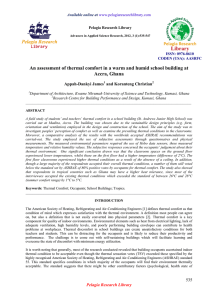
An assessment of thermal comfort in a warm and humid
Aluminum Conductor Properties and Advantages
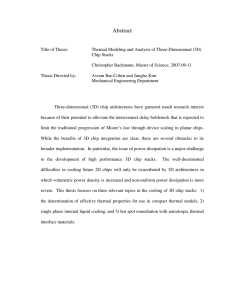
Abstract
Aalborg Universitet Diffuse Ceiling Inlet Systems and the Room Air Distribution
A Zero Net Energy Building Pilot Study: Low Energy
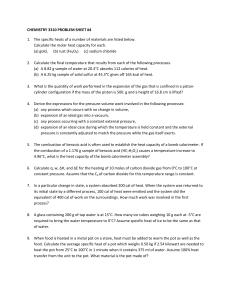
CHEMISTRY 3310 PROBLEM SHEET #4 1. The specific heats of a
CHEMICAL THERMODYNAMICS energy = anything that has the
<
1
2
3
4
5
6
7
8
9
...
129
>